Concrete Foundation Systems: A Complete Guide
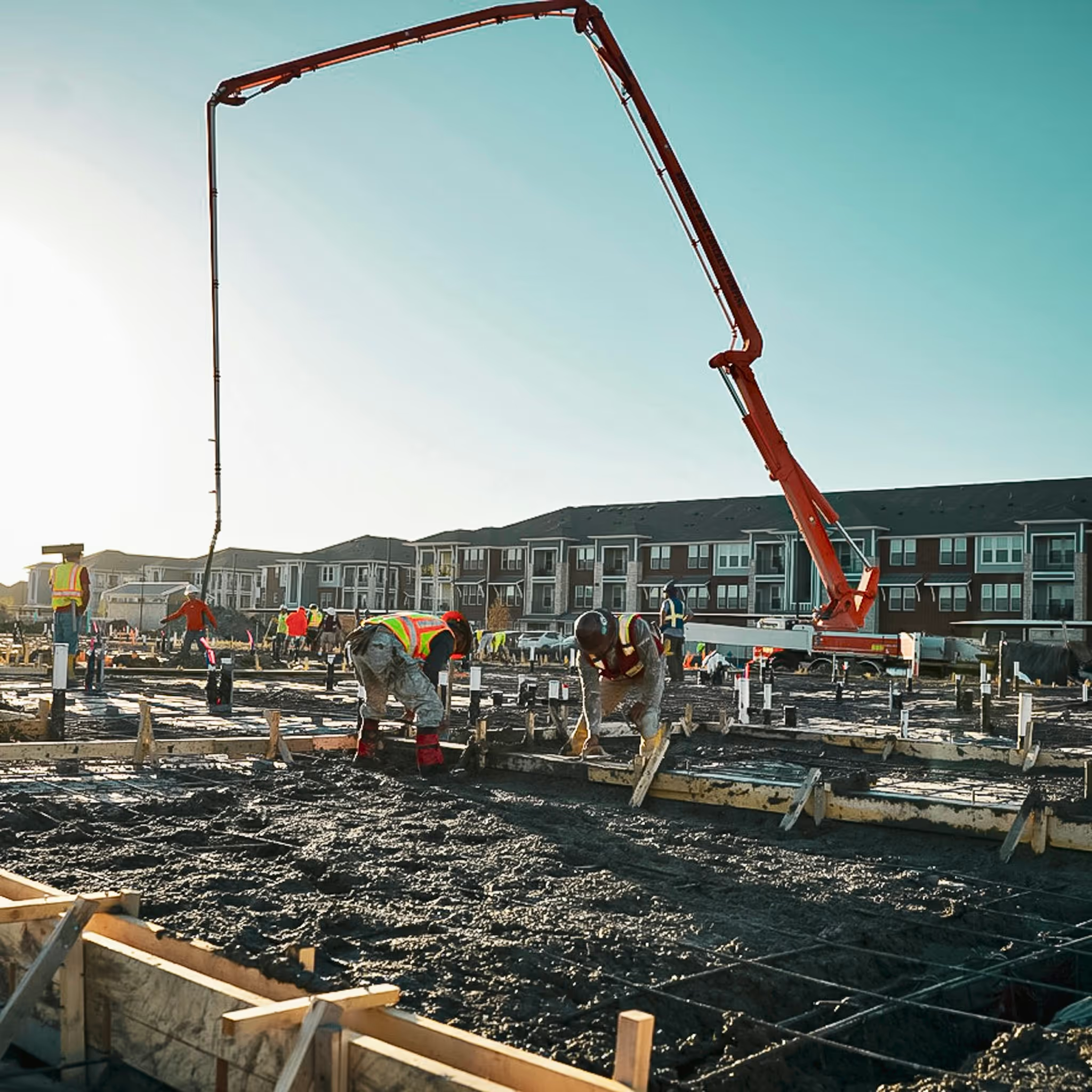
The foundation isn't just the first phase of your multifamily construction project—it's the most critical. Everything above ground depends on what happens below it, and in the competitive Dallas development market, foundation quality, accuracy, and speed directly impact your bottom line.
Whether you're building garden-style apartments in the suburbs or a high-density podium project in an urban core, understanding multifamily foundation systems helps you make informed decisions that keep your project on schedule and on budget.
Why Multifamily Foundations Are Different
Residential foundations and commercial foundations may look similar to the untrained eye, but multifamily projects present unique structural and logistical challenges that require specialized expertise.
Load Distribution and Structural Requirements
Multifamily buildings carry different loads than single-family homes or commercial structures. Multiple stories, varied unit layouts, and integrated parking structures create complex load paths that must be engineered precisely and executed accurately.
Foundation systems must account for:
- Point loads from columns supporting podium decks
- Distributed loads from bearing walls spanning multiple units
- Live loads from parking structures or ground-level retail
- Lateral loads from wind and seismic considerations
- Long-term settlement in expansive North Texas clay soils
These variables require concrete contractors who understand structural engineering principles, not just how to pour a slab.
Coordination Intensity
Before a single yard of concrete gets placed, multifamily foundations require coordination with:
- Civil engineers managing site grading and drainage
- Structural engineers approving rebar placement and embedments
- Plumbing contractors setting underground utilities
- Electrical contractors placing conduit runs
- Survey crews verifying elevations and layout
- Building inspectors reviewing compliance
When one trade falls behind or makes an error, the entire foundation schedule suffers. This is why experienced multifamily concrete contractors invest heavily in preconstruction planning and onsite coordination—because preventing problems is always cheaper than fixing them.
Common Foundation Systems for Multifamily Construction
Different project types require different foundation approaches. Here's what you need to know about the most common systems in multifamily construction:
Slab-on-Grade Foundations
Best for: Garden-style multifamily, low-rise wood-frame construction
Slab-on-grade foundations are the most economical option for projects where the first floor sits directly on prepared subgrade. In North Texas, this typically involves:
- Proof-rolling to verify subgrade stability
- Moisture barrier installation
- Perimeter and interior beam reinforcement
- Post-tension cable placement for crack control
- Precise embedment placement for plumbing and electrical
The key to successful slab-on-grade construction? Subgrade preparation. Expansive clay soils in the Dallas area require proper moisture management and compaction to prevent future settlement. Cutting corners here creates problems that show up months after certificate of occupancy.
Elevated Slab and Podium Deck Systems
Best for: Podium projects, wrap-style buildings, urban developments
When parking or retail occupies the ground level, elevated concrete decks create a platform for wood-frame or steel-frame construction above. These post-tensioned concrete systems are engineering marvels—and construction challenges.
Critical considerations for podium decks include:
- Shoring and formwork systems that support thousands of square feet of wet concrete
- Post-tensioning cables that must be stressed according to precise engineering specifications
- Waterproofing coordination to protect parking areas below
- Embeds and blockouts for MEP systems that penetrate the deck
- Curing requirements before shoring can be removed and framing can begin
Podium decks sit squarely on the critical path. Delays here ripple through every trade that follows, making contractor reliability and experience non-negotiable.
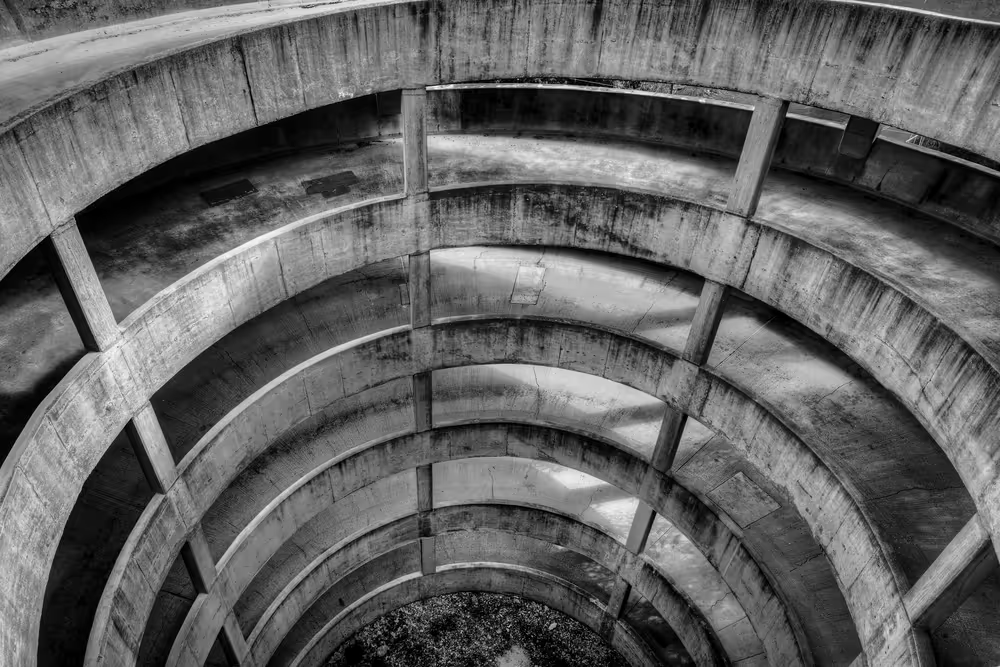
Cast-in-Place Parking Structure Foundations
Best for: Mid-rise and high-rise multifamily with integrated parking
Multi-level parking structures require foundations that support significant vertical loads and accommodate vehicle traffic patterns. These foundations typically feature:
- Thickened edge beams and column footings
- Rebar cages engineered for punching shear
- Vapor barriers and drainage systems
- Proper slope for water management
The complexity of parking structure foundations demands contractors with deep structural concrete experience and the equipment to handle large-scale pours efficiently.
Foundation Quality Control: What Separates Good from Great
Any concrete contractor can pour a foundation. Great concrete contractors ensure that foundation performs exactly as engineered—and prove it with documentation.
Testing and Inspection Protocols
Professional multifamily concrete contractors follow rigorous quality control processes:
- Pre-pour inspections: Verify subgrade, rebar placement, embedments, and forms before concrete arrives
- Concrete testing: Slump tests, air content, and cylinder samples for every pour
- Post-tensioning verification: Elongation measurements to confirm cables are properly stressed
- Elevation surveys: Confirm finished slab height matches architectural plans
- Curing monitoring: Ensure proper moisture and temperature conditions
These steps aren't optional extras—they're standard practice for contractors who stand behind their work.
The Cost of Foundation Failures
Foundation problems aren't always catastrophic, but they're always expensive. Common issues include:
- Settlement cracks requiring repair and cosmetic fixes in finished units
- Out-of-level floors complicating framing and finish work
- Moisture infiltration damaging ground-level units and finishes
- Structural reinforcement deficiencies discovered during inspections
- Misplaced embeds requiring costly coordination delays
Every one of these problems traces back to shortcuts during the foundation phase. The cheapest bid often becomes the most expensive choice.
Soil Considerations for Dallas-Area Foundations
North Texas clay soils present unique challenges that out-of-area contractors often underestimate. Expansive clay swells when wet and shrinks when dry, creating movement that can crack slabs and damage foundations.
Successful foundation construction in Dallas requires:
- Geotechnical engineering to understand soil bearing capacity and expansion potential
- Moisture management systems including proper drainage and vapor barriers
- Post-tensioning or reinforcement designed specifically for expansive soils
- Subgrade preparation that removes unsuitable material and ensures proper compaction
Local concrete contractors who've built hundreds of projects in North Texas know these soils intimately and design their approach accordingly.
Choosing a Foundation Contractor for Your Multifamily Project
When evaluating concrete contractors for your foundation package, look beyond the bid price. Ask about:
- Multifamily-specific experience: How many projects like yours have they completed?
- Self-performed work: Do they control their own crews and equipment?
- Quality control processes: What testing and inspection protocols do they follow?
- Local knowledge: Do they understand North Texas soil conditions?
- Schedule reliability: Can they provide references confirming on-time delivery?
- Problem-solving approach: How do they handle weather delays and coordination challenges?
The right foundation contractor brings more than concrete trucks and crews—they bring expertise that prevents problems before they start.
Building on Solid Ground
Multifamily foundation systems aren't a commodity—they're a specialized scope that requires engineering knowledge, construction expertise, and unwavering attention to detail. In a market as competitive as Dallas-Fort Worth, developers who understand this invest in concrete contractors with proven multifamily experience.
At Beacon Concrete, we've spent decades perfecting foundation systems for garden-style apartments, podium projects, and wrap buildings across North Texas. We self-perform every aspect of our work with trained crews who understand that your project's success starts with the foundation we deliver.
When you're ready to build on solid ground, choose a concrete contractor who's been doing it right for decades. Your timeline, your budget, and your reputation depend on it.